>>>
Project-Reaction
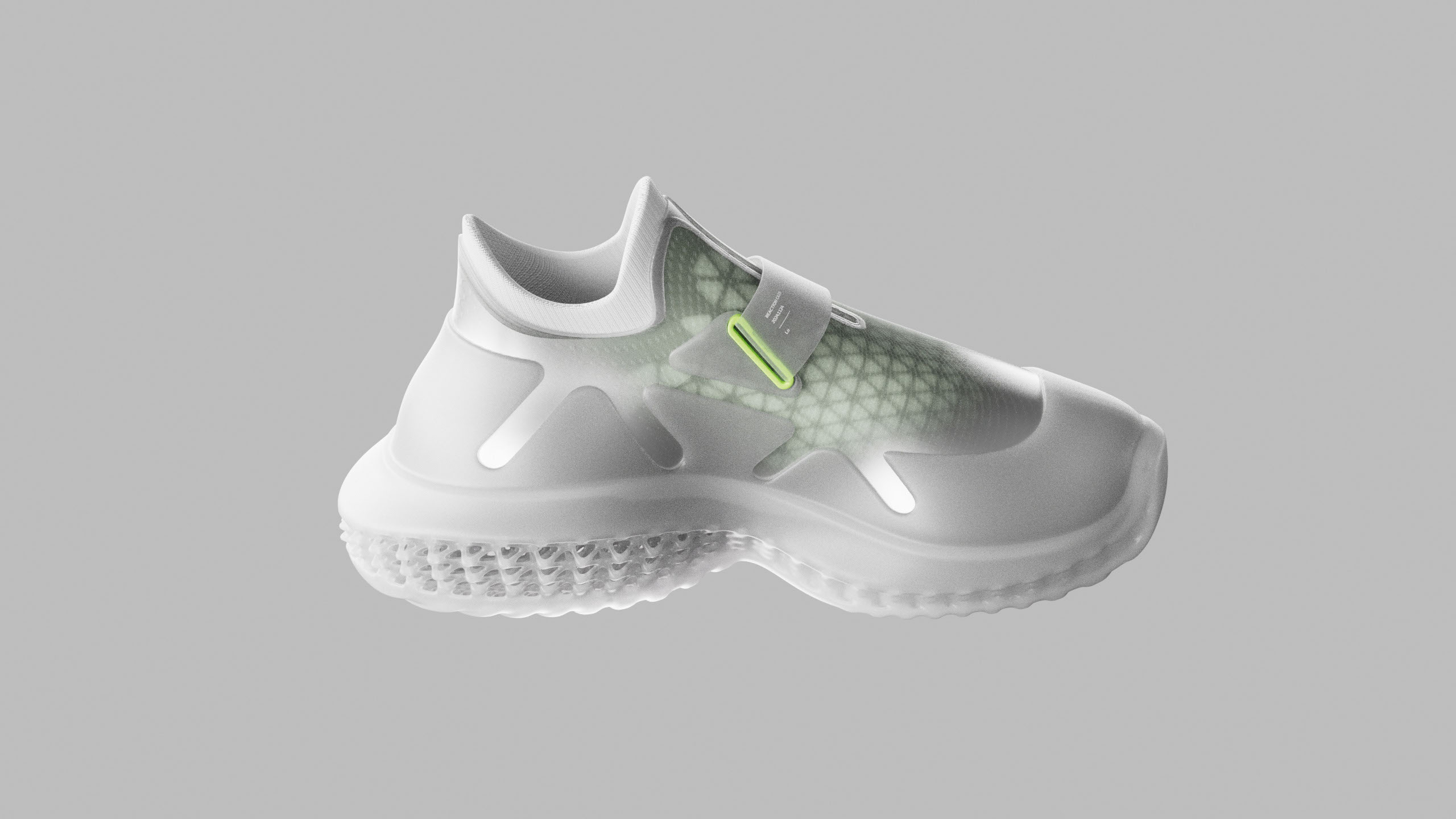
A computationally grown midsole that tunes its own structureto the way a single foot loads.
Overview
A running shoe carries one foot, but the foam inside it is made the same for everyone. Project-Reaction asks what a midsole looks like when its structure is computed instead of molded, so cushioning can be soft where the foot lands and firm where it pushes off.
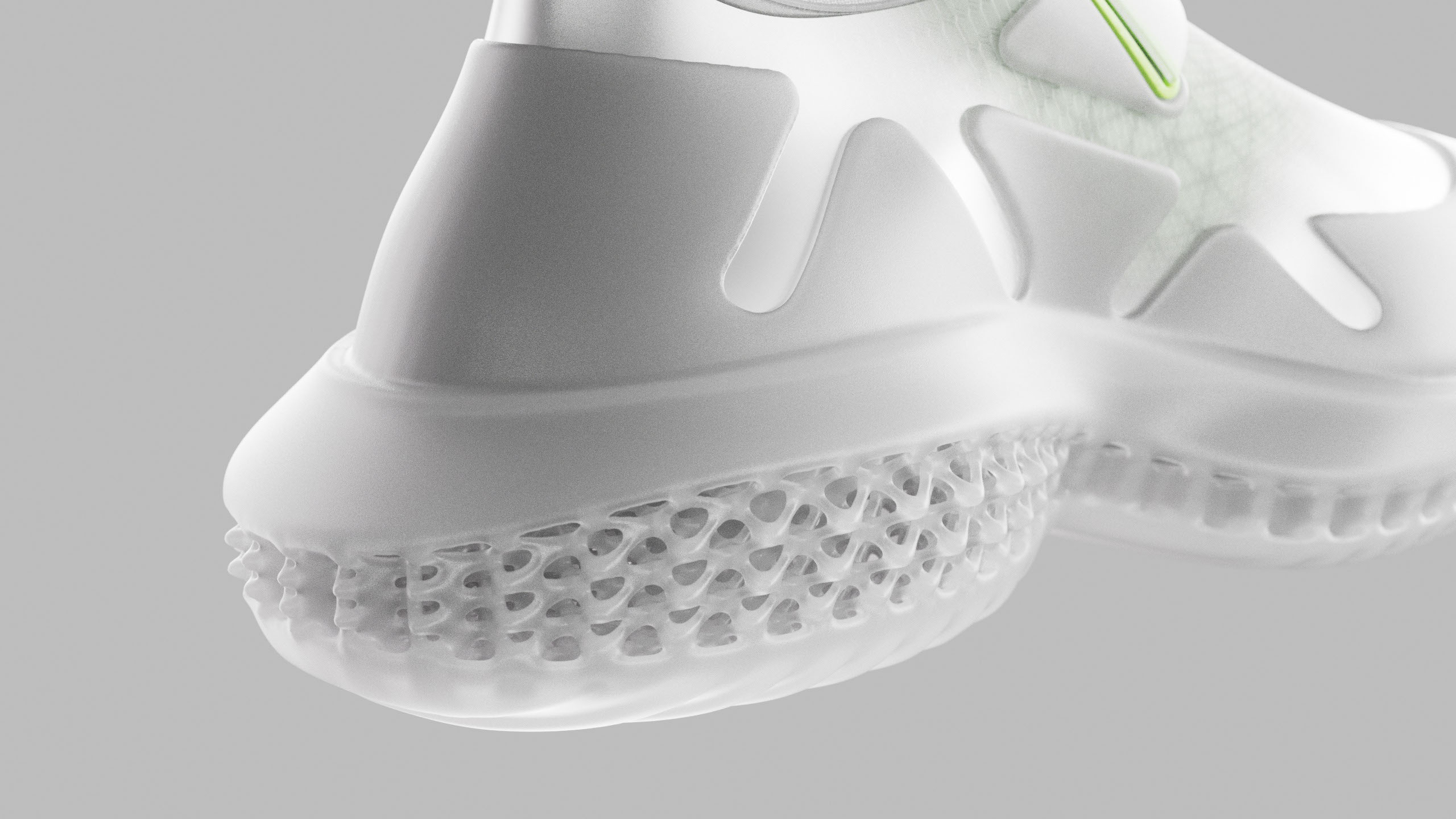
The result is a 3D-printable lattice built in Grasshopper and Rhino, where a single parametric definition turns foot-load data into an organic, gradient structure.
Project info
Role
Industrial Designer
Timeline
2024
Tools
Grasshopper, Rhino, Blender
Category
Computational footwear design
Problem
A foam midsole is uniform by default. It compresses the same amount under the heel, the arch, and the ball of the foot, even though those zones carry very different loads during a stride. To feel soft on landing it has to give up support on push-off, and to feel stable it has to give up comfort. Every molded midsole is a single compromise stretched across the whole foot.
That compromise gets worse the more it scales. One mold makes one stiffness for thousands of different feet and gaits. The structure cannot adapt, because casting foam gives you a shape, not a tunable material.
Research
Printed lattice midsoles already exist in the market, so the question was not whether it is possible but how the structure should be driven. Looking at where the foot actually presses during a stride, the load concentrates in a few clear zones: the heel strike, the lateral edge, and the ball under the toes. The arch carries far less.
That pressure pattern became the brief for the structure. A good lattice should be dense and firm under the high-load zones and open and soft everywhere else, with a smooth gradient in between so there are no hard edges underfoot.
Note for Lu: confirm the specific references and any real pressure data you used so this stays accurate.
Insight
If the foot loads in zones, the midsole should be made in zones too. Stop molding one stiffness and start computing many.
Principles
Structure follows load
Where the foot pushes harder, the lattice gets denser. The form is driven by force, not decoration.
One continuous body
The midsole reads as a single grown object instead of stacked parts, so the organic language stays honest.
Built to be printed
Every move stays inside what additive manufacturing can actually produce, so the concept is buildable, not just rendered.
Sketching
Before any code, the silhouette and the structural language were worked out by hand. These sketches set the overall stance of the shoe and tested how an organic, grown lattice could read as a midsole instead of a pattern stuck onto a normal sole.


Computational workflow
The core of the project is a single Grasshopper definition that turns foot-load input into a printable lattice. Instead of modeling the structure by hand, the definition grows it, which means the density, cell size, and gradient can all be retuned by moving a few sliders.
Input
Pressure map and driving curves of the foot
Lattice
Generate the organic cell structure
Gradient
Vary density to match load zones
Mesh
Thicken and smooth into a solid
Export
Print-ready geometry out of Rhino


Note for Lu: a screenshot of the full Grasshopper canvas plus one zoomed-in cluster makes this section land. Export them as gh-1.jpg and gh-2.jpg.
Form development
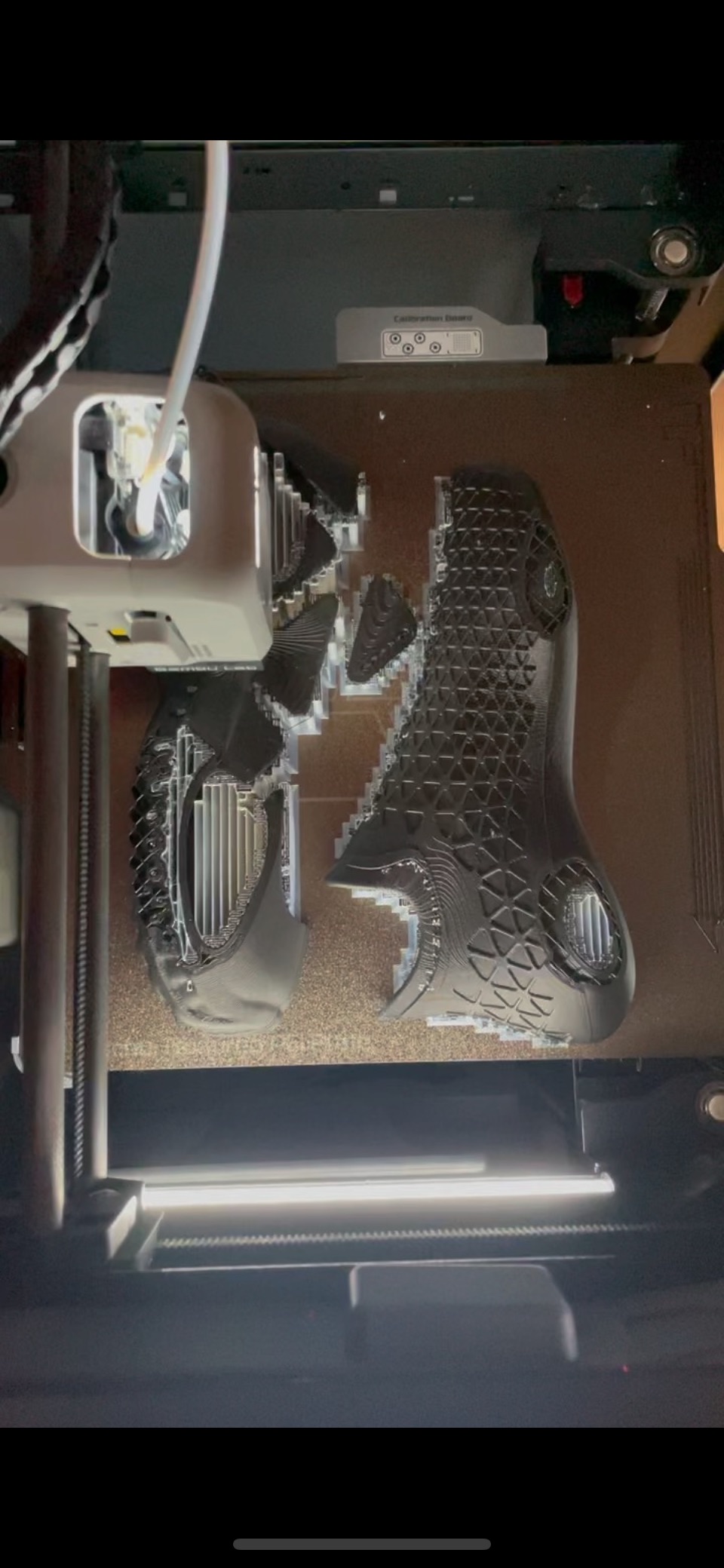
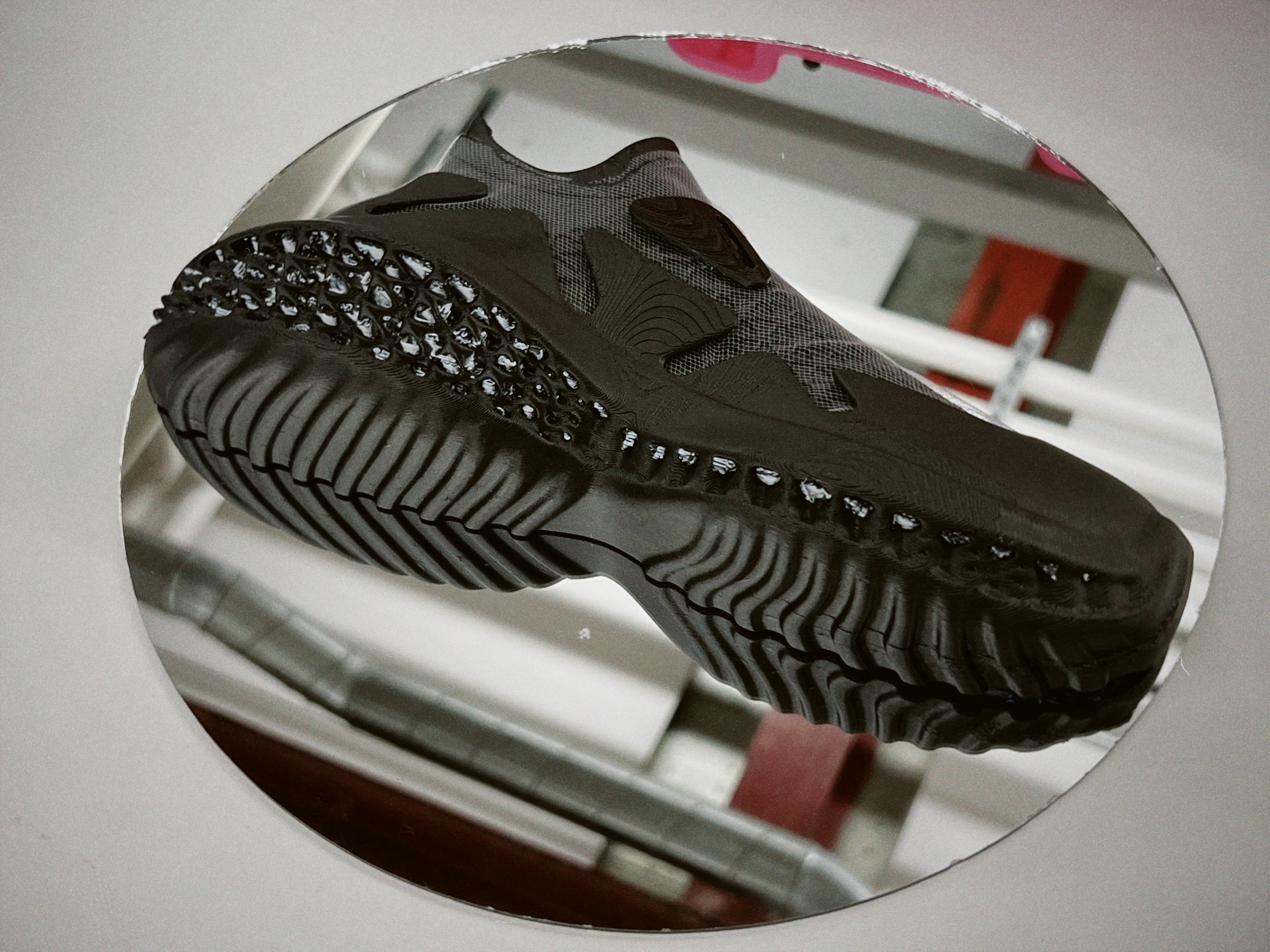
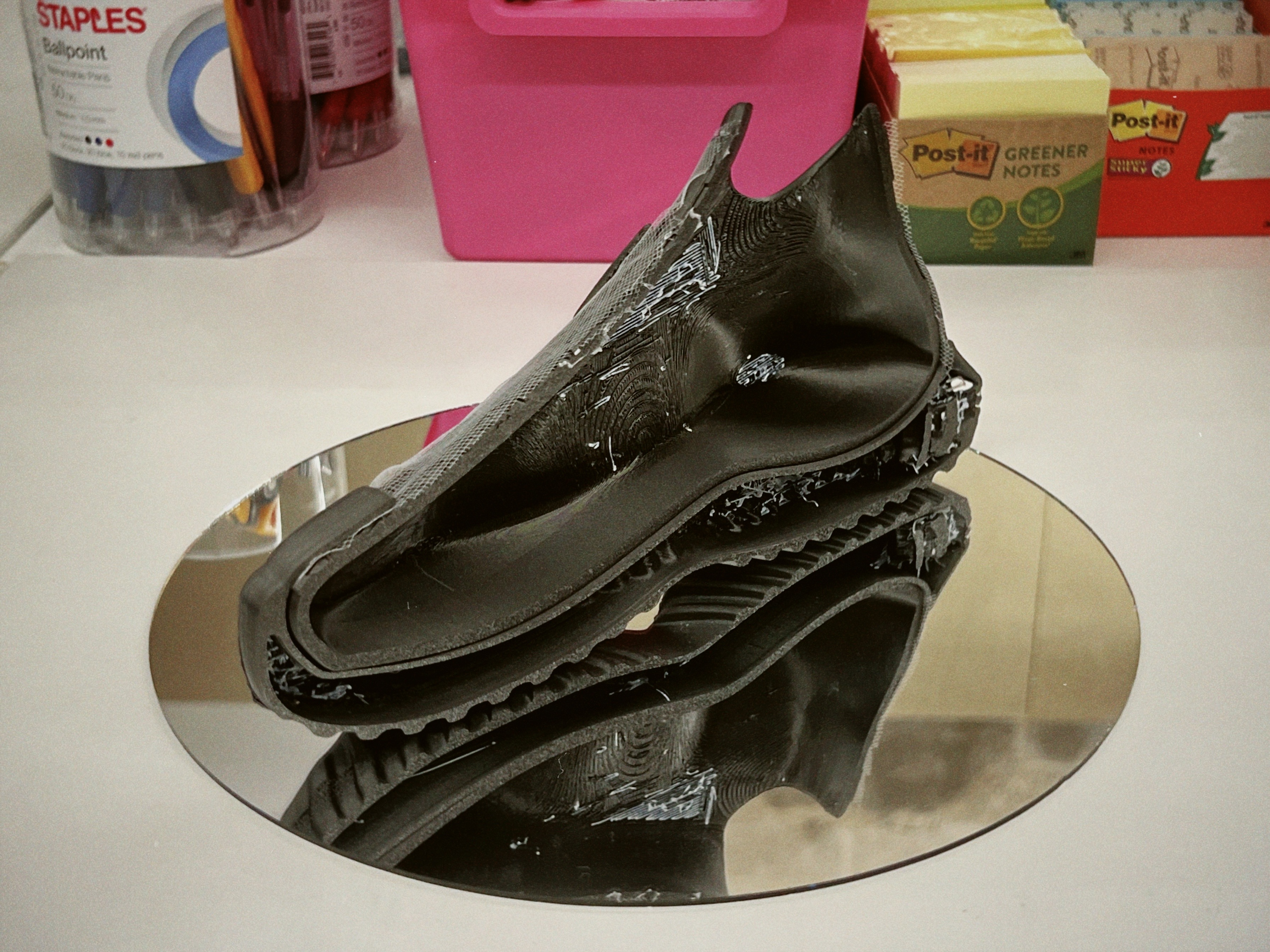
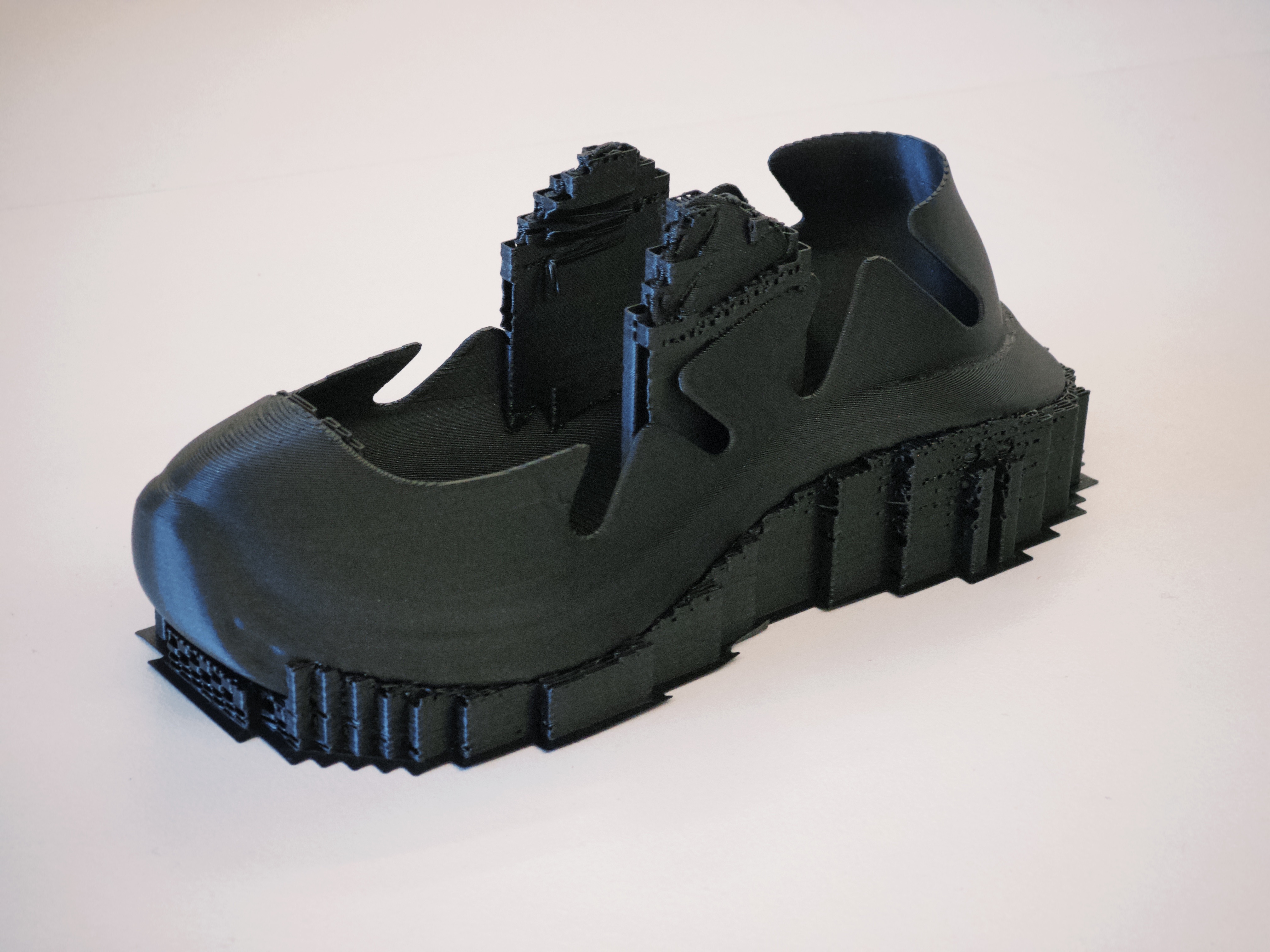
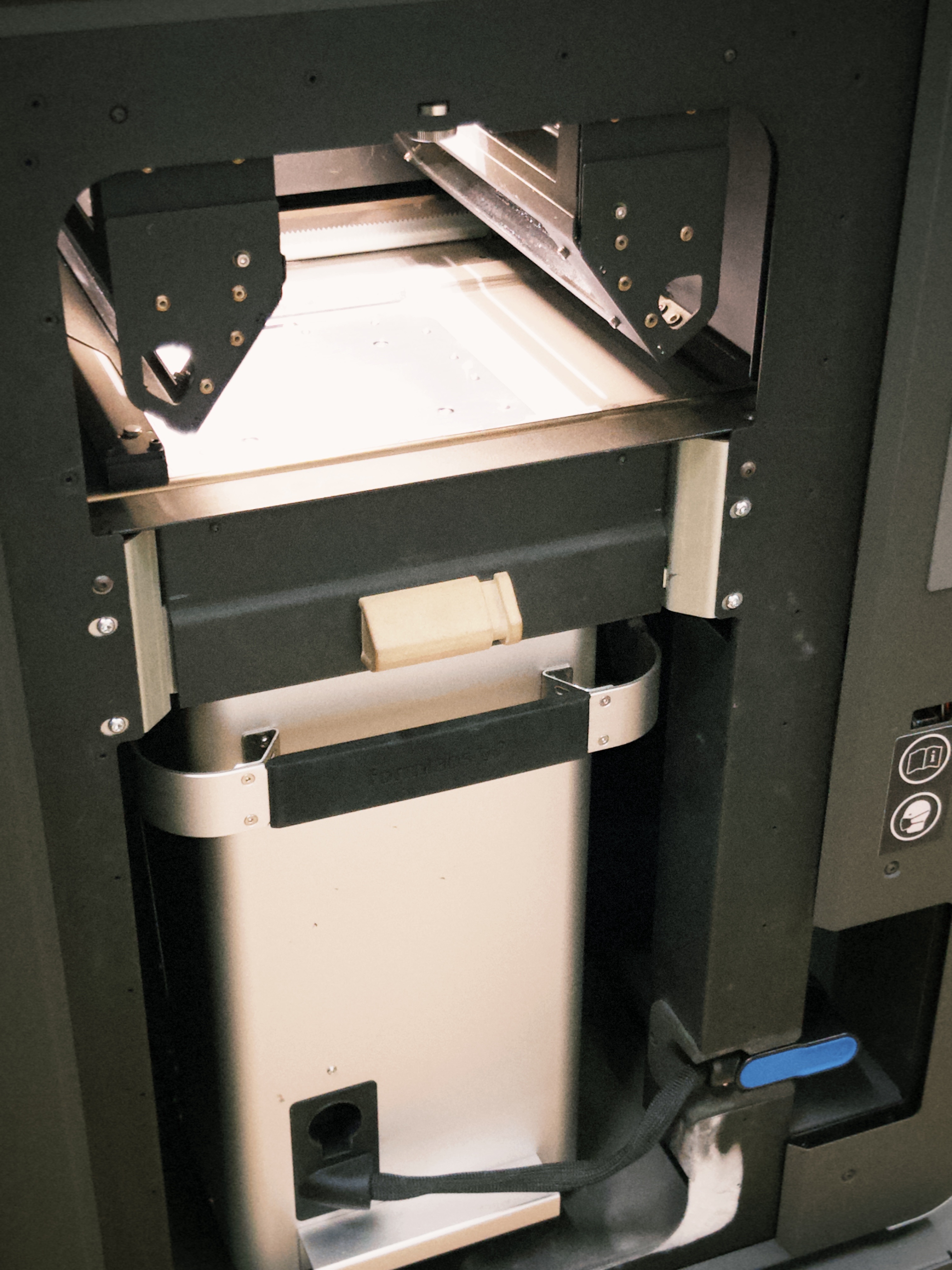
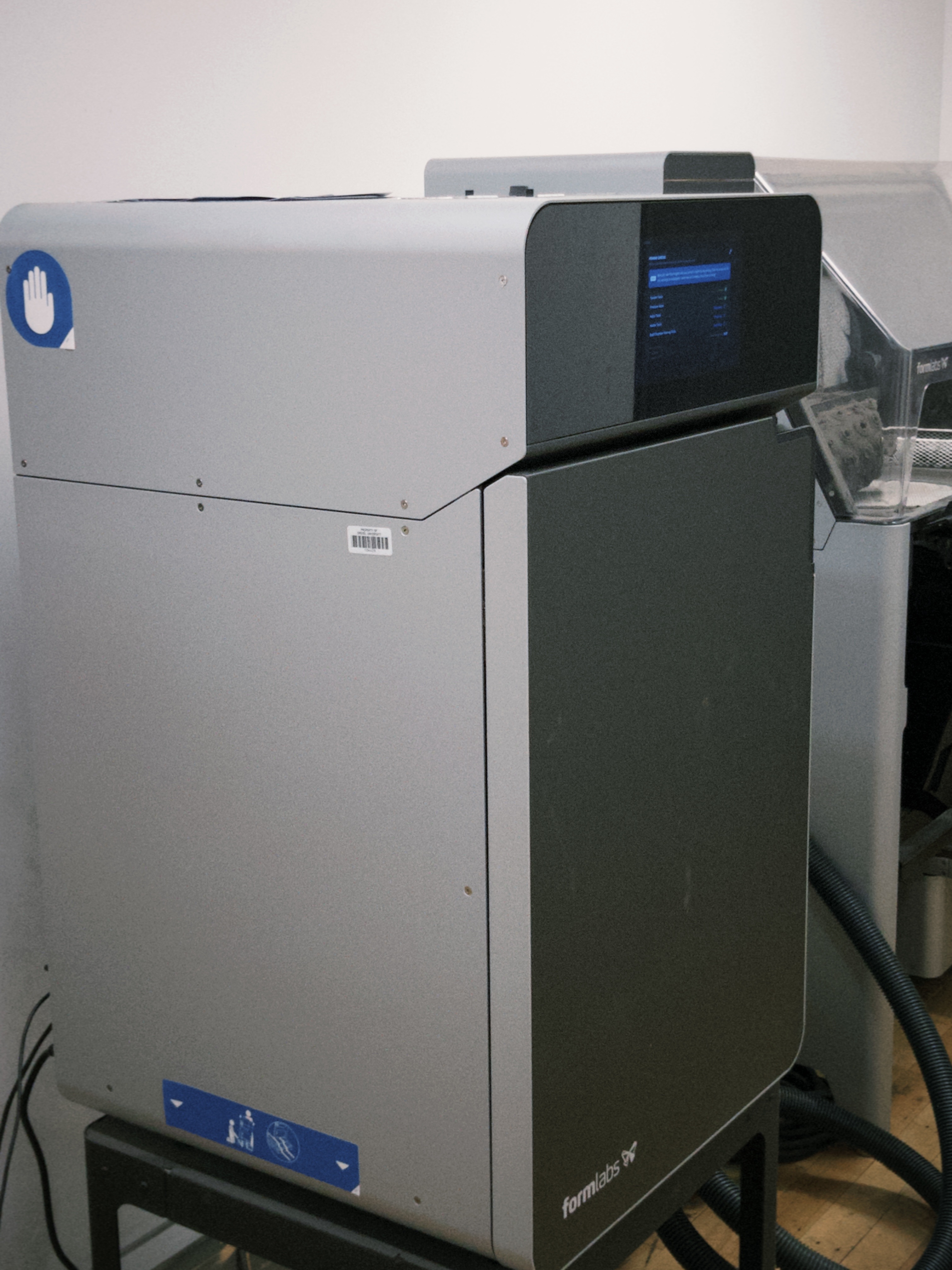
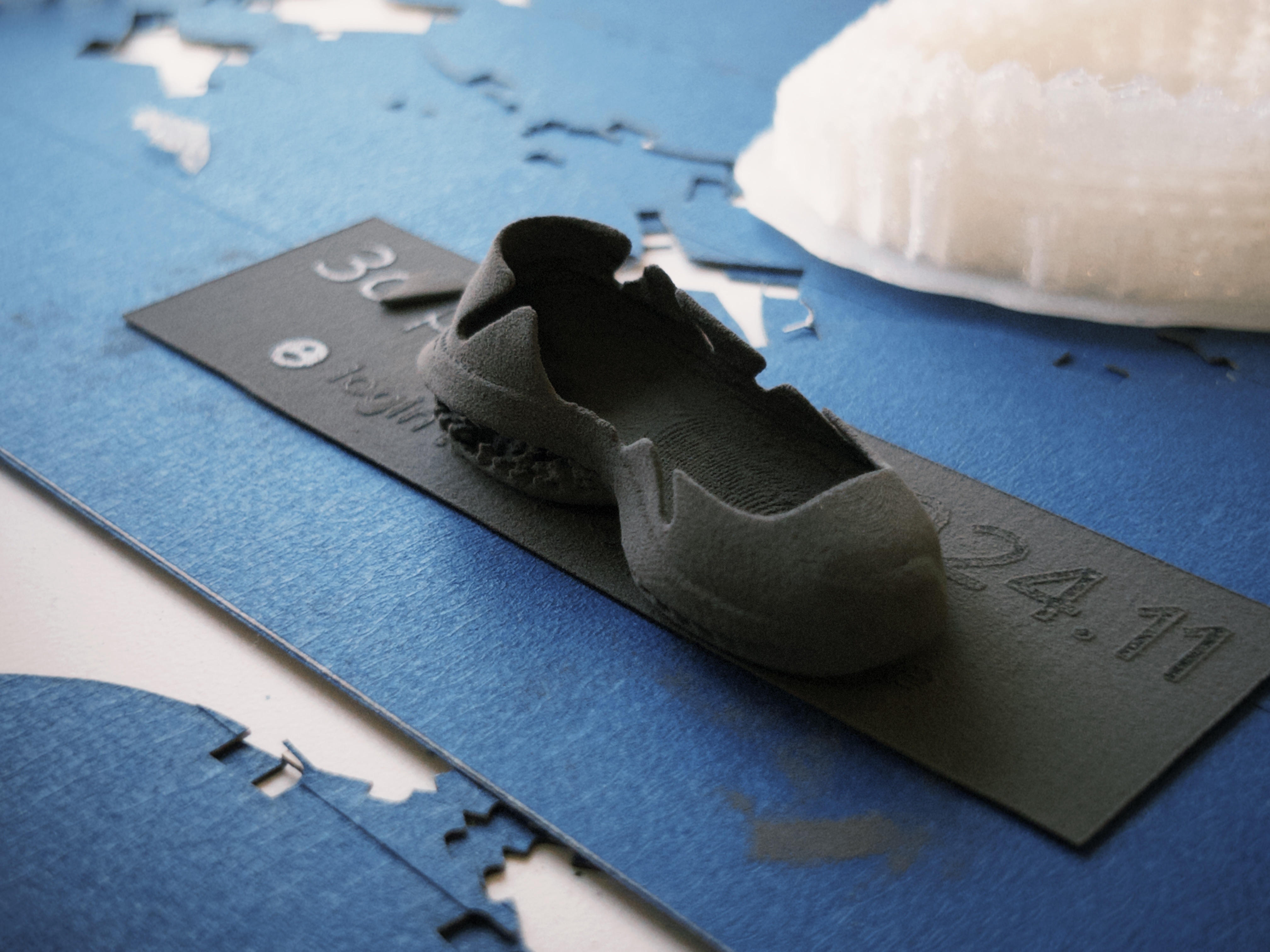
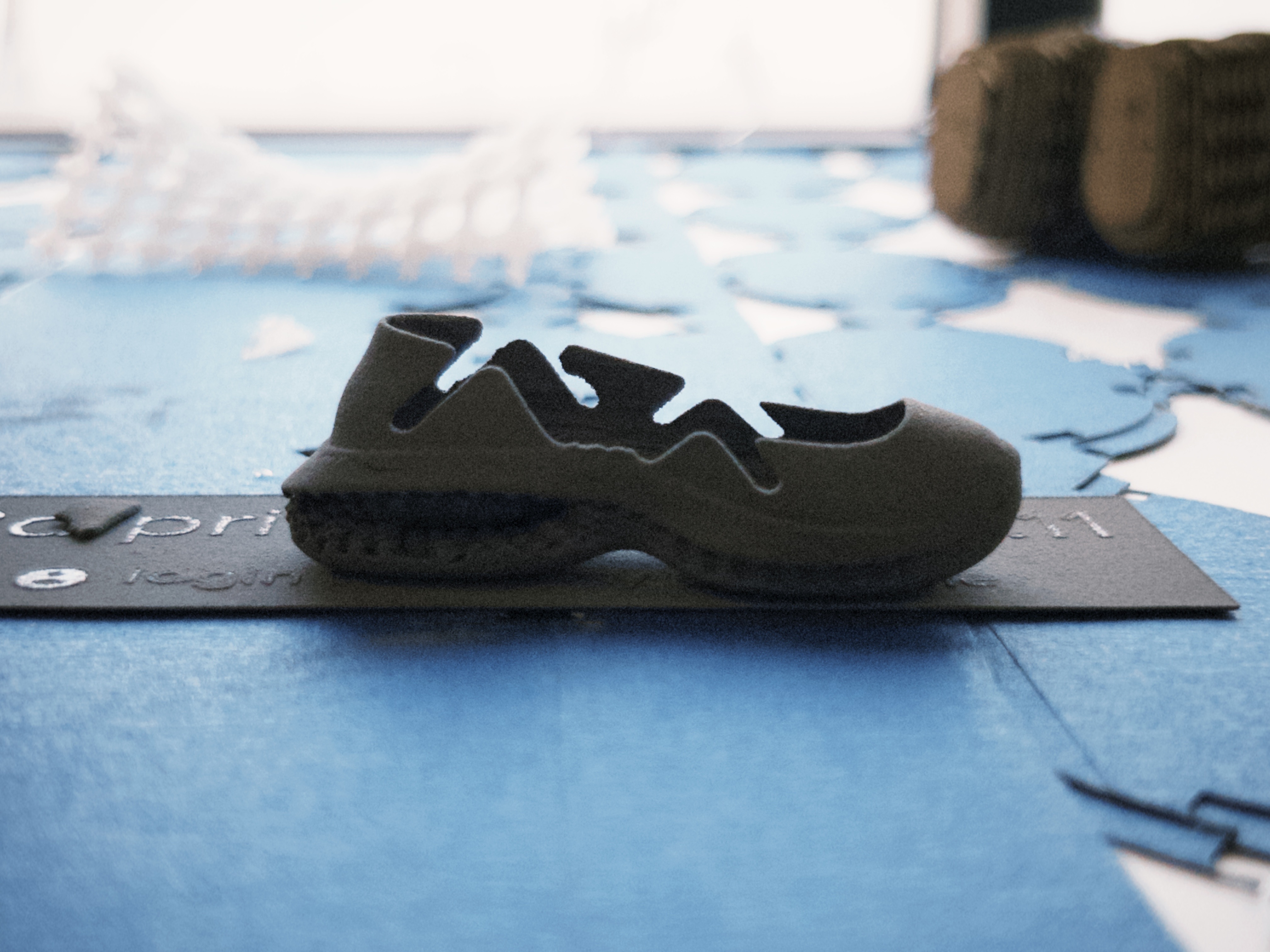
With the definition working, the form was pushed through iterations: tuning cell size, adjusting how sharply the density changes between zones, and resolving how the lattice meets the upper. These process frames show that exploration.
Material & CMF
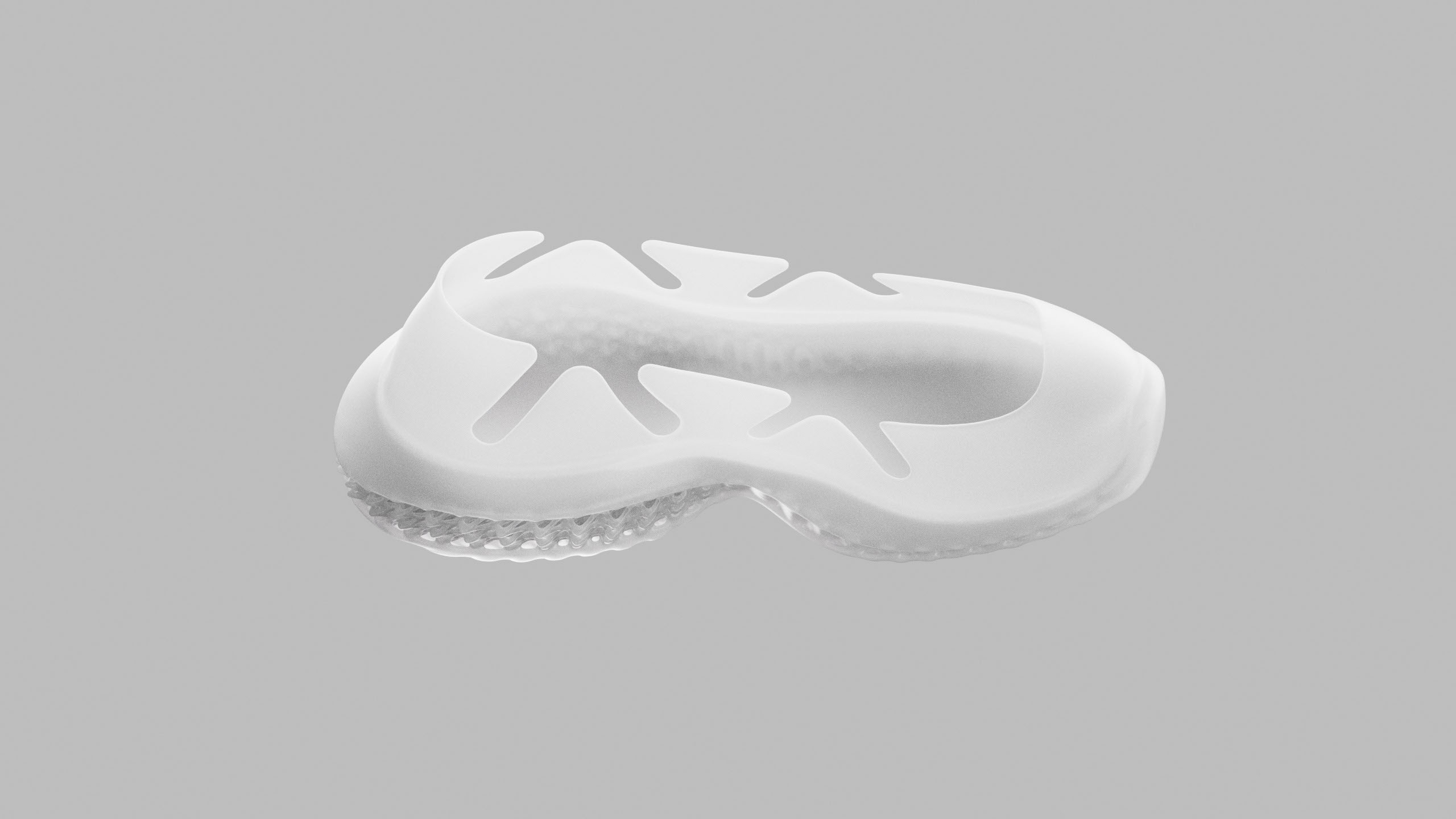
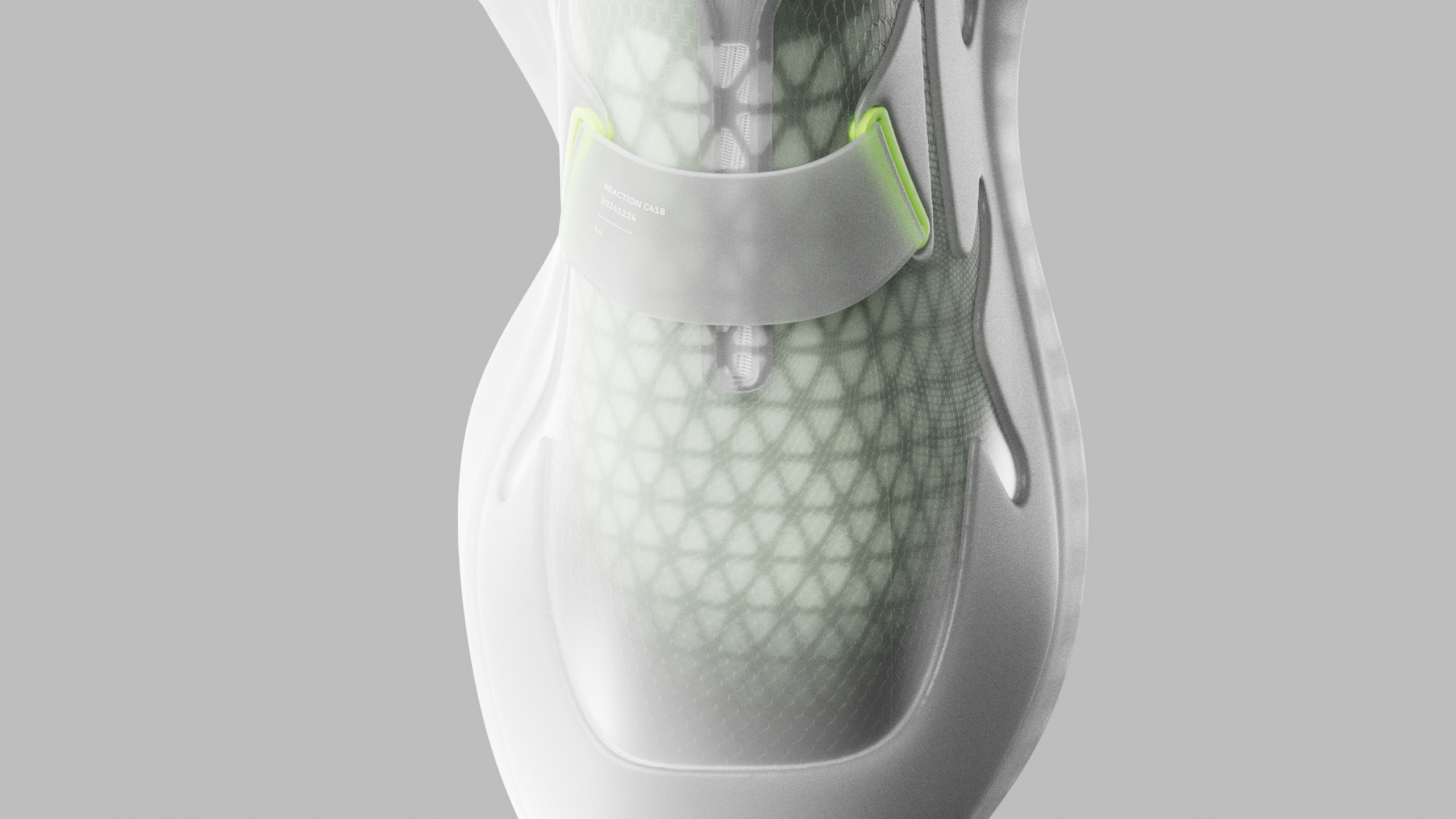
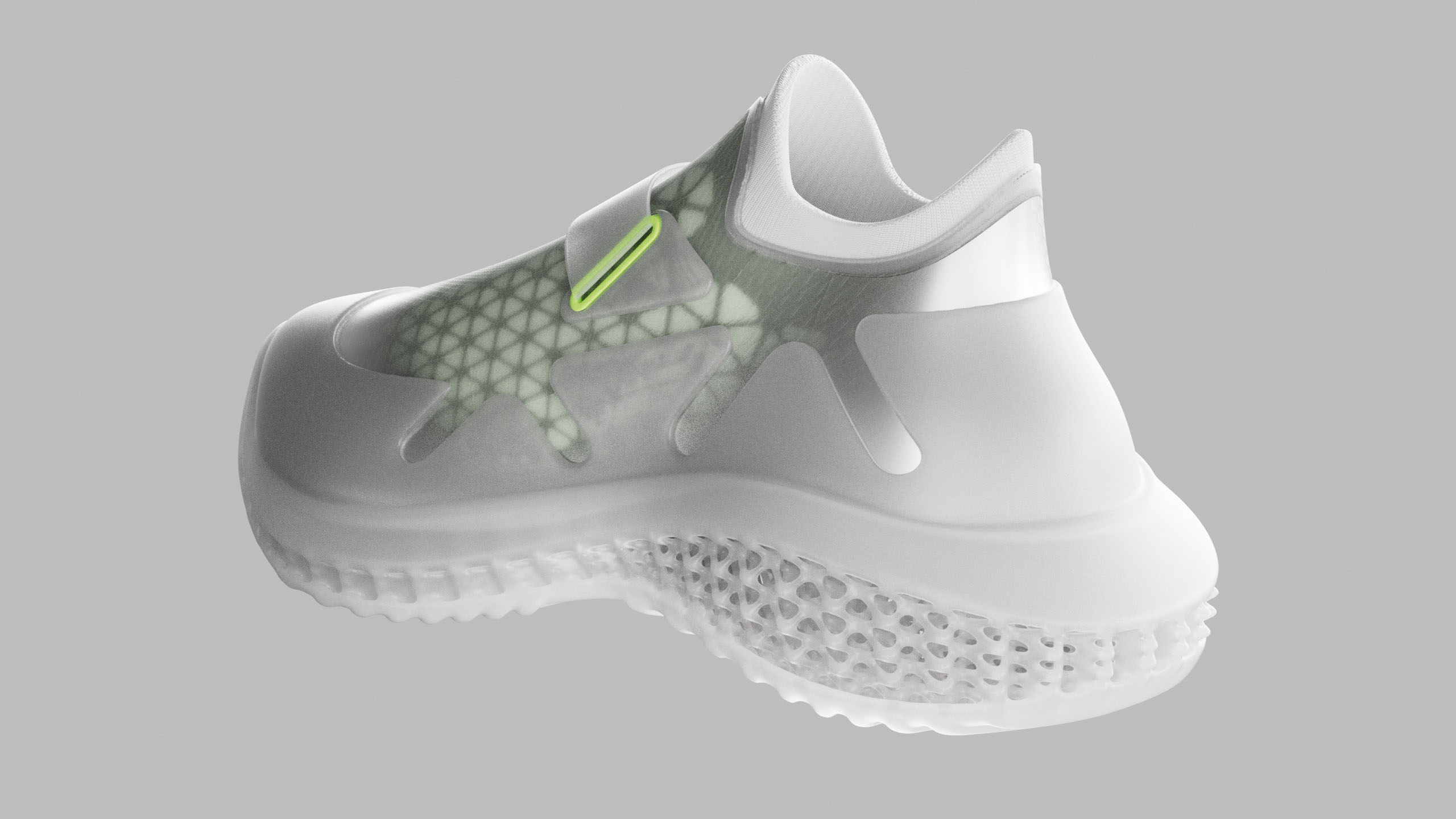
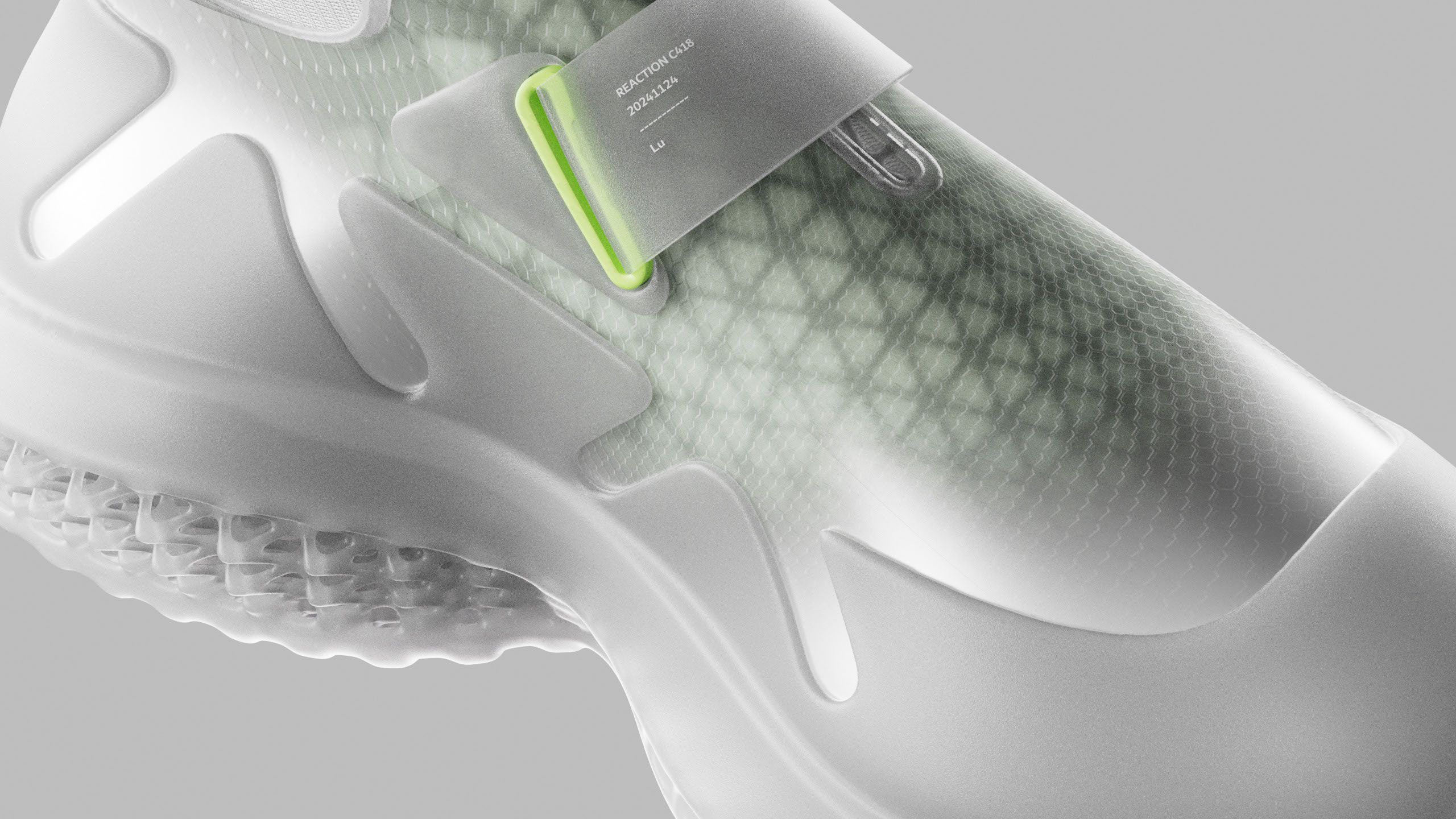
Because the structure is printed, the material does double duty: it is both the surface and the cushioning. The colorway keeps the lattice readable, using a clean body so the density gradient stays visible and a single accent to mark the high-load zones.
Note for Lu: confirm the real print material and colorway names so this is accurate.
Final renders
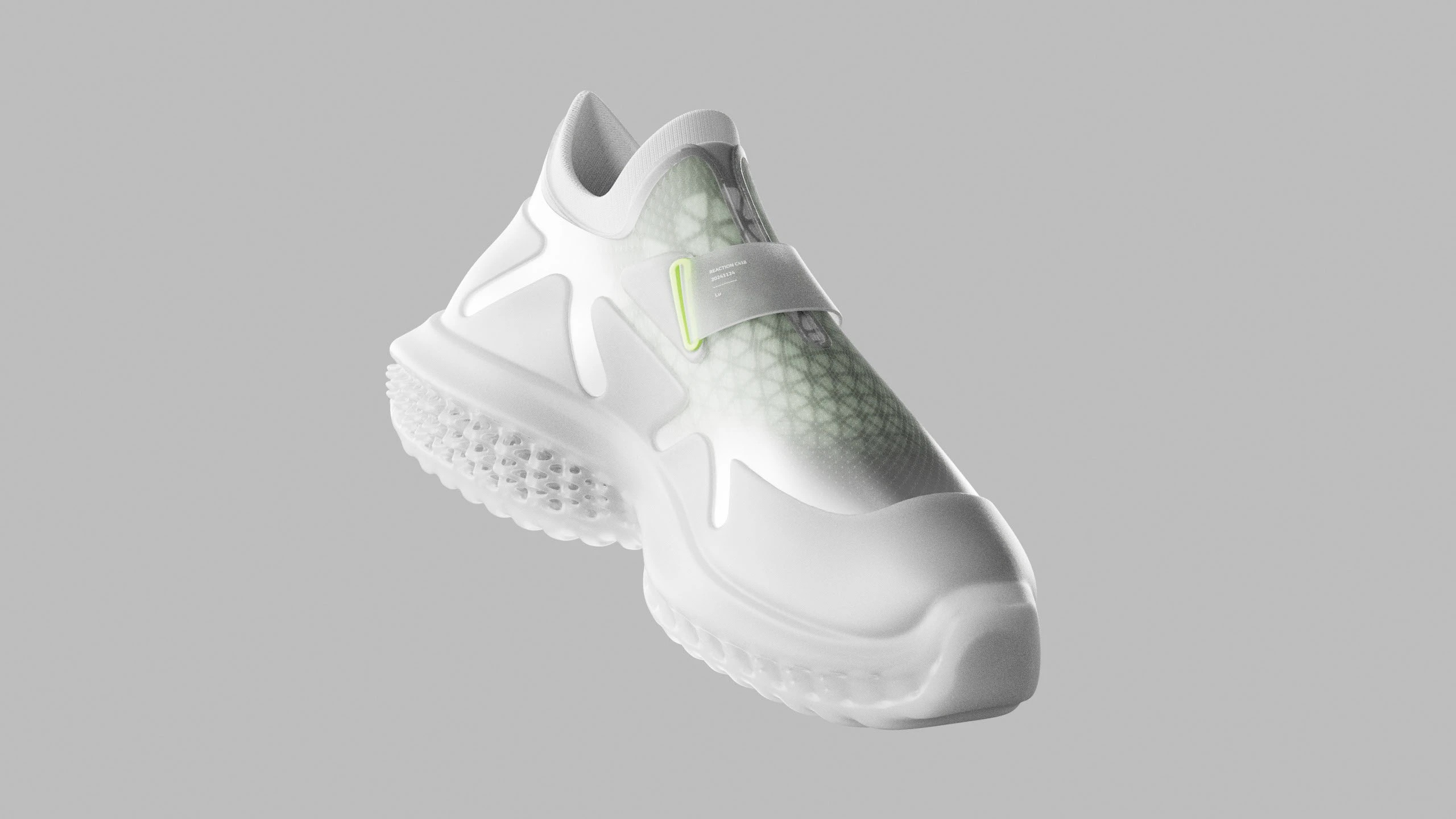
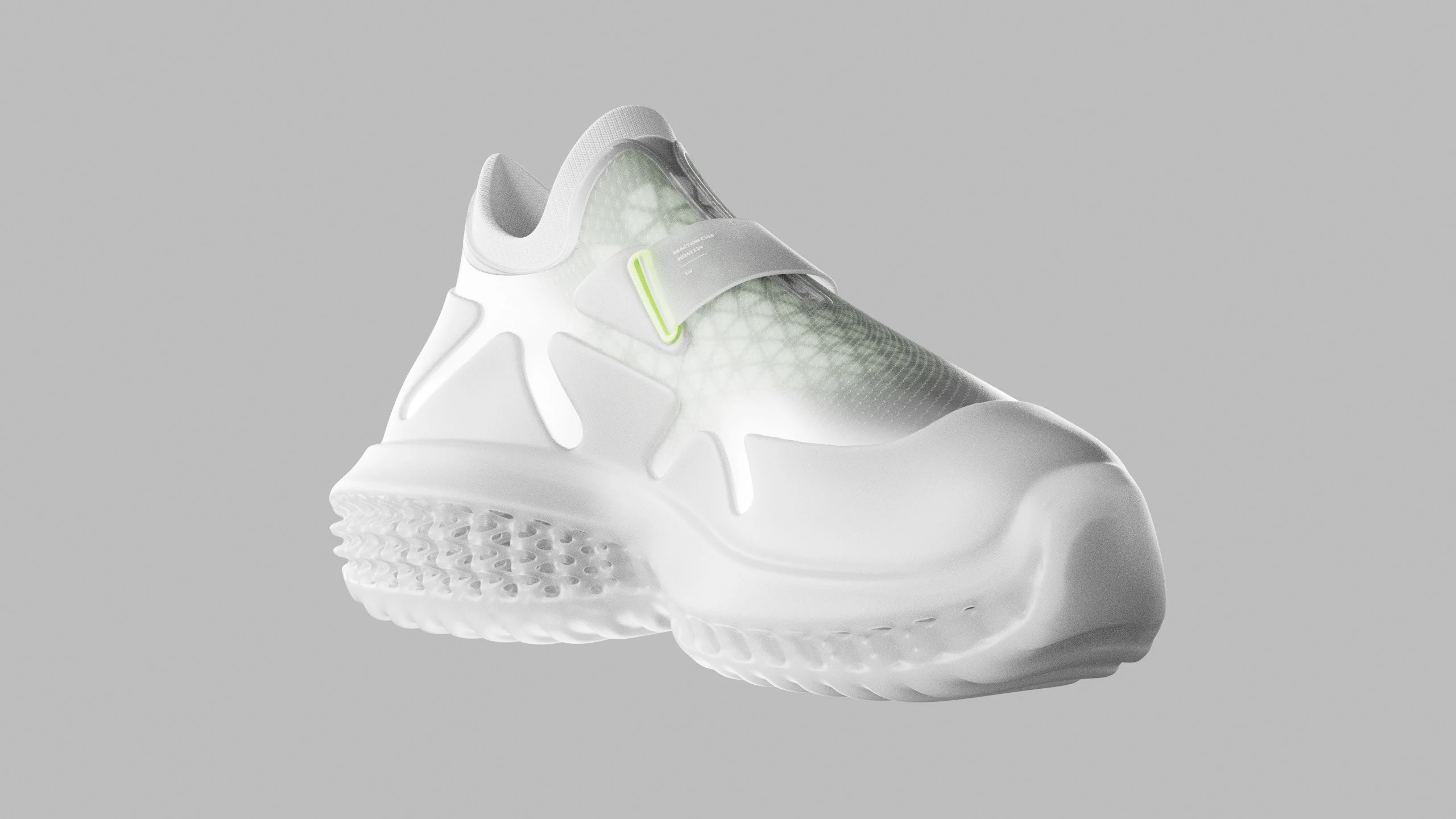
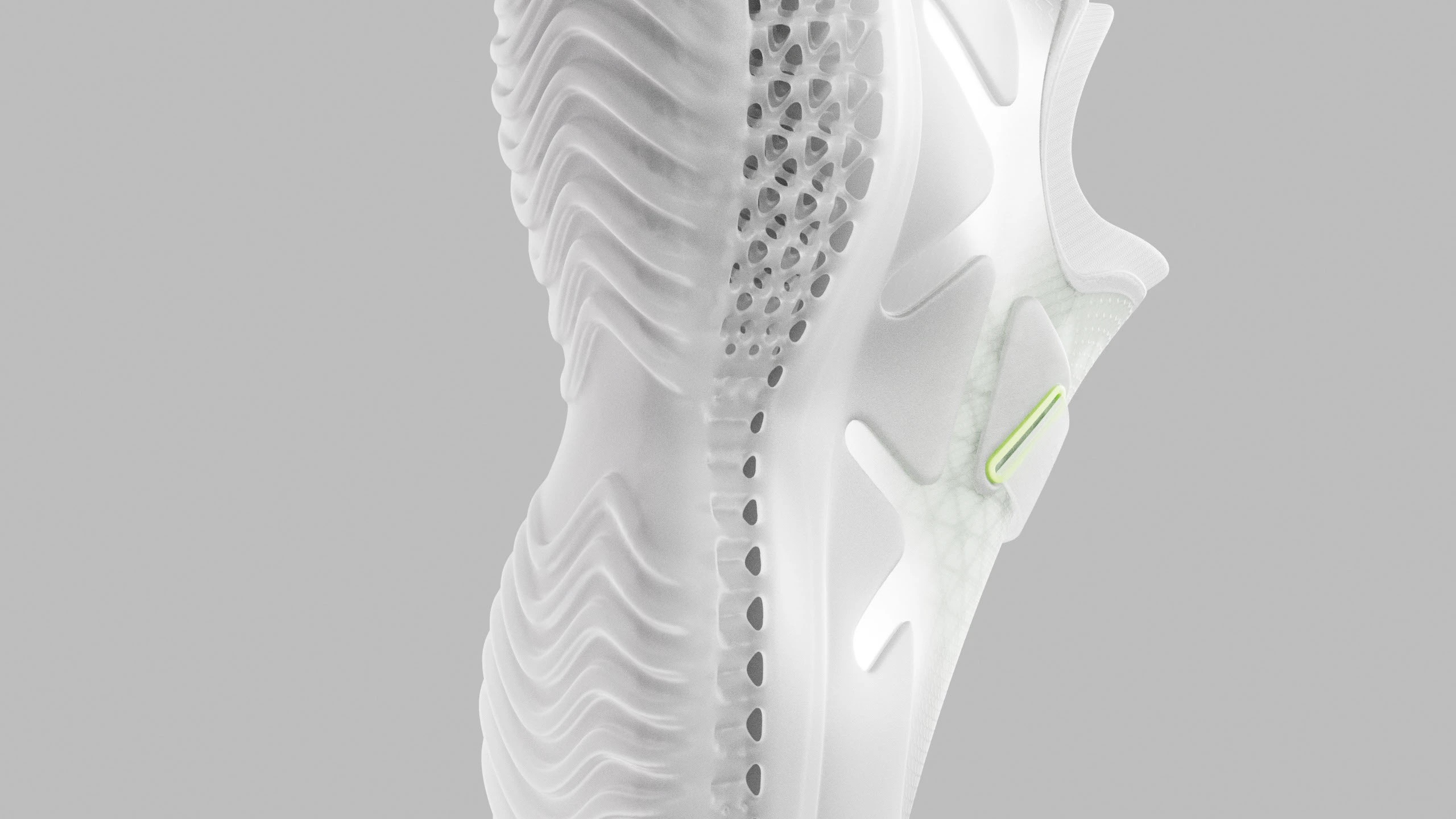
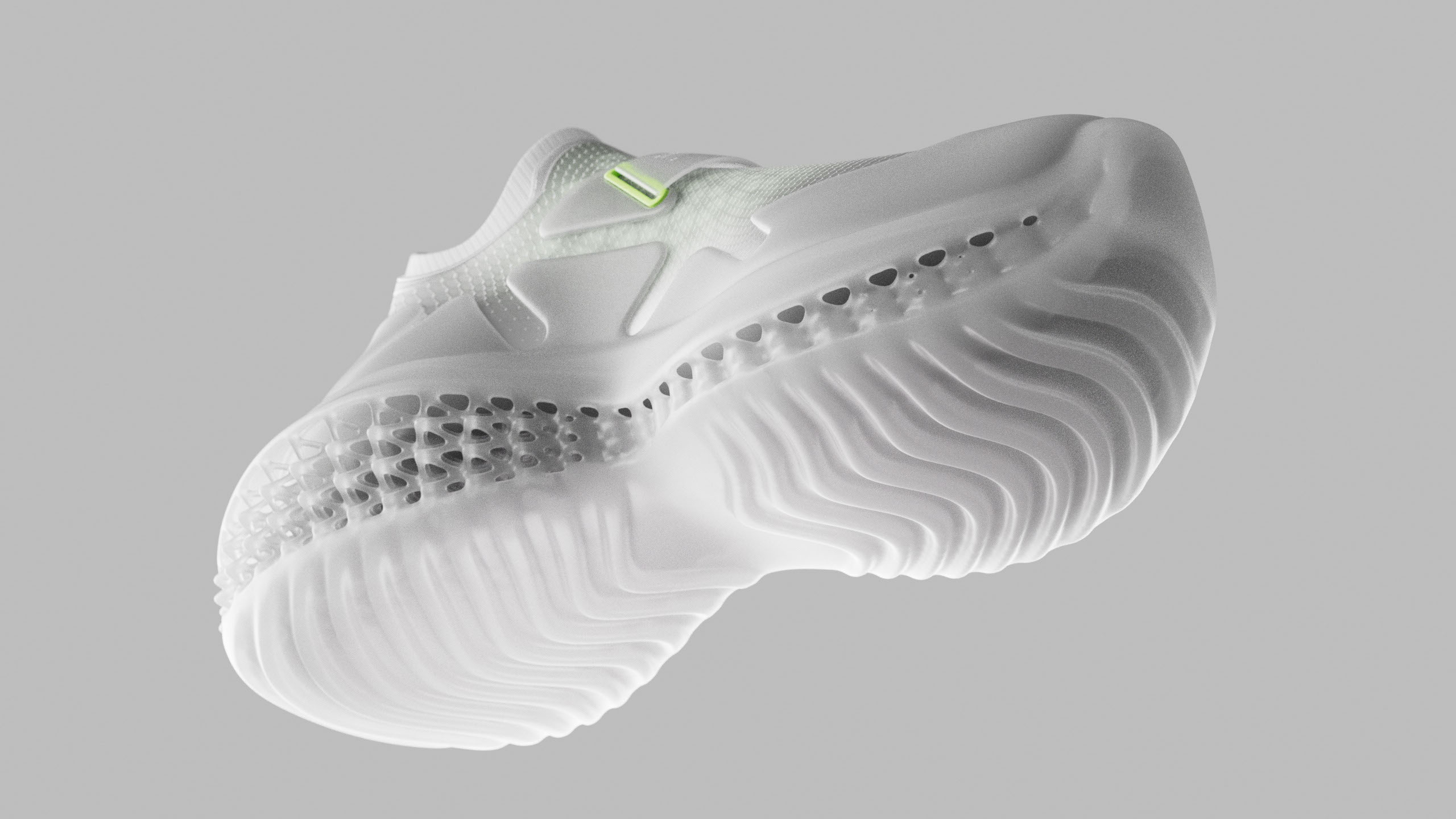
Technical
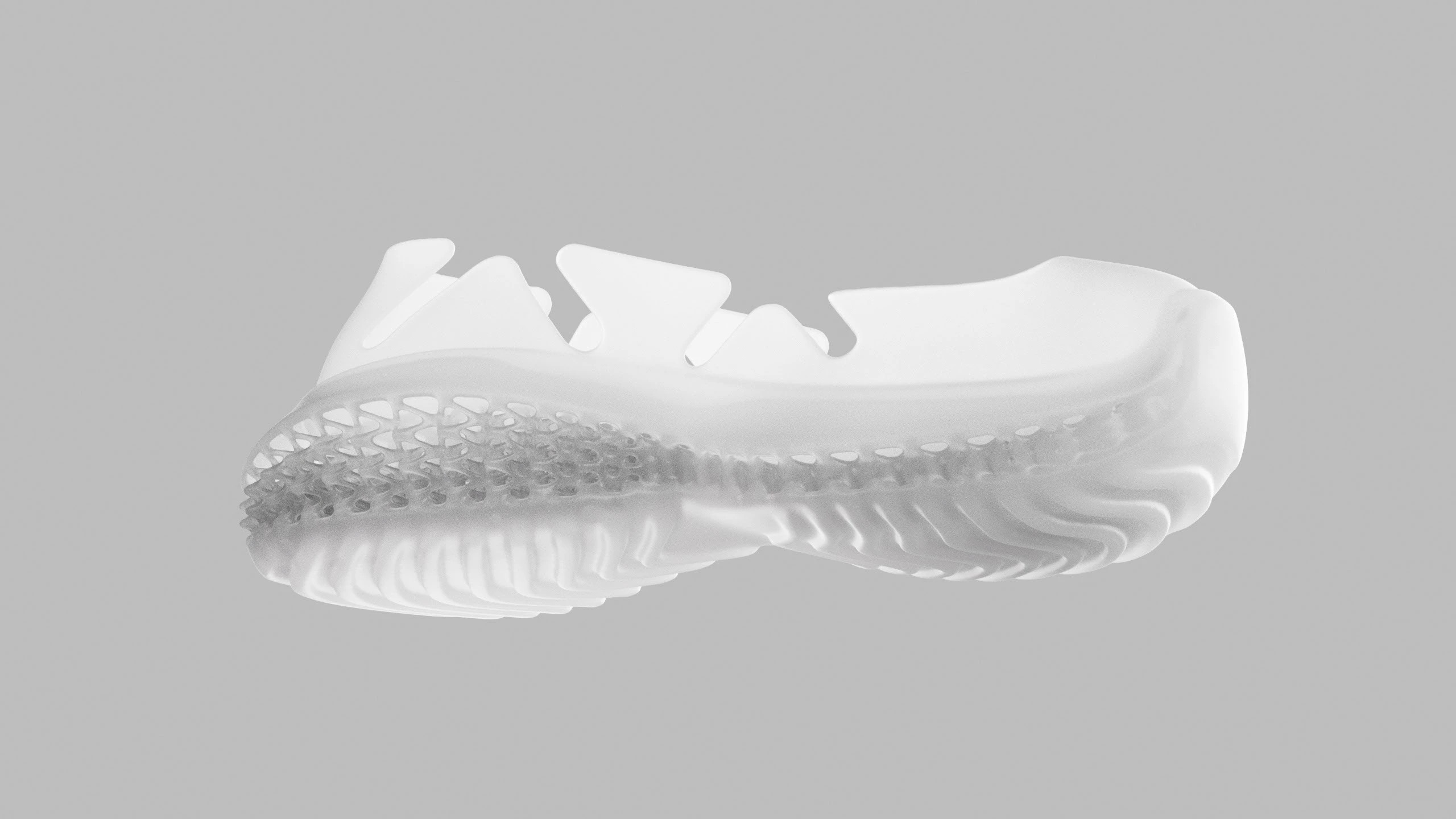
An exploded view ties the story together: it shows the lattice midsole, the upper, and how the structure resolves into a buildable product rather than a one-off render.

Reflection
The strongest part of the project is that the structure is not drawn, it is driven. Once the Grasshopper definition reads load as input, the same logic could adapt to a different foot, a different sport, or a different weight just by changing the data going in.
Pushing it further would mean printing a real midsole and testing the gradient underfoot, then closing the loop so a scan of an actual foot drives the lattice directly.
Note for Lu: replace this with your real takeaways and next steps.